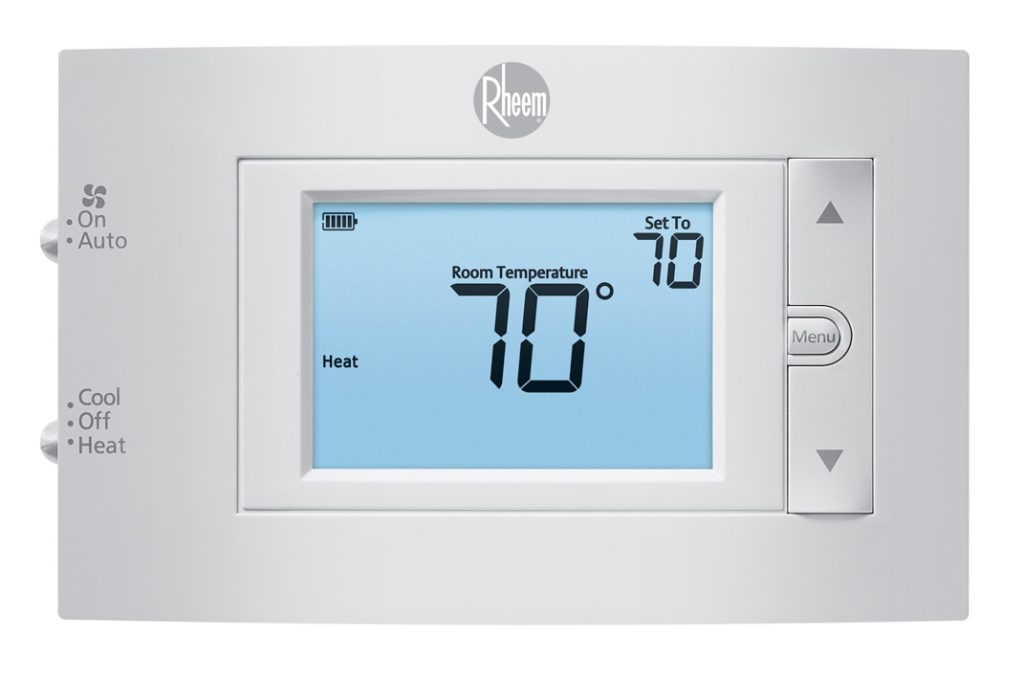
When your thermostat isn’t working, it throws off your whole home. The heat won’t kick on. The AC stays silent. And you’re left wondering whether you need a simple fix or a full system repair. Before you call for help, there are a few things worth checking first — because many thermostat problems have simple solutions.
Is Your Thermostat Not Working Because of a Power Issue?
This is the first place to look. A thermostat that goes blank or unresponsive is often a power problem, not a broken unit.
Check these first:
- Dead batteries — Many thermostats run on AA or AAA batteries. Swap them out and see if the screen comes back.
- Tripped circuit breaker — Head to your electrical panel. If the breaker for your HVAC system has tripped, reset it.
- Loose wiring — If you’re comfortable removing the thermostat cover, check that the wires are seated firmly in their terminals.
These steps take less than five minutes and solve the problem more often than you’d think.
Could Thermostat Placement Be Causing Temperature Problems?
Your thermostat reads the air around it. If that air isn’t representative of your whole home, the readings will be off.
Common placement problems include:
- Direct sunlight hitting the unit, making it think the room is warmer than it is
- Drafts from windows or doors causing false cool readings
- Proximity to vents or lamps that skew the temperature sensor
If your system runs too long, shuts off too soon, or never seems to reach the set temperature, location could be the culprit. A professional can relocate the unit to a more neutral spot on an interior wall.
Is Your Thermostat Not Communicating With Your HVAC System?
Sometimes the thermostat display looks fine — but nothing happens when you adjust the settings. That’s a communication problem between the thermostat and the heating or cooling equipment.
Possible causes:
- Dirty or corroded contacts inside the thermostat
- Incorrect wiring after a DIY install or battery swap
- An incompatible smart thermostat that doesn’t match your system’s wiring setup
If you recently installed a new thermostat and the system won’t respond, a wiring mismatch is likely. Some smart thermostats require a C-wire (common wire) that older homes don’t have. A technician can add a C-wire adapter or recommend a compatible model.
When Should You Replace Your Thermostat Instead of Repairing It?
Not every thermostat problem is worth fixing. If your unit is more than 10 years old, repairs may cost more than a replacement — and a new programmable or smart thermostat can save you money on energy bills year-round.
Consider replacing if:
- The thermostat is reading temperatures inaccurately even after recalibration
- It’s an older manual dial model
- You’re dealing with repeated issues that keep coming back
- You want better control through a smartphone app
Frequently Asked Questions
Why does my thermostat display go blank? A blank thermostat screen usually means a power issue. Start by replacing the batteries. If the screen stays dark, check your circuit breaker. If neither fixes it, there may be a wiring fault that needs a technician.
Why is my thermostat set correctly but my home still isn’t comfortable? If your thermostat is set to the right temperature but the system isn’t keeping up, the issue may not be the thermostat at all. It could be a dirty air filter, a refrigerant leak, or a failing blower motor. A full HVAC inspection can identify the root cause.
How do I know if my thermostat needs to be replaced? If your thermostat is more than 10 years old, showing inconsistent readings, or failing to trigger your HVAC system despite correct settings, replacement is usually the smarter move. Modern programmable thermostats are more reliable and energy-efficient.
Still Having Trouble? AFM Heating & Cooling Can Help
If you’ve worked through these steps and your thermostat still isn’t working, the problem may be deeper in your HVAC system. AFM Heating & Cooling serves Plymouth and the surrounding area with honest, experienced HVAC service.
Call us, book online, or schedule a diagnostic visit today — we’ll get your home back to the right temperature fast.
Posted on April 8, 2026 | Published by Ignite Local | Related Local Business